Basskia: A Strategic Guide to Using This Playful Handwritten Script Font
In the crowded landscape of digital design, the choice of typography is a foundational strategic decision. It’s not merely about aesthetics; it’s about communication, brand positioning, and the efficiency of your creative workflow. The Basskia font, a modern and playful handwritten script, represents a specific tool with distinct capabilities. Understanding its strategic applications, its inherent strengths, and its contextual limitations is key to leveraging it effectively for better project outcomes, whether you're a small business owner, a freelancer, or a creative professional.
Understanding Basskia: More Than Just a Font
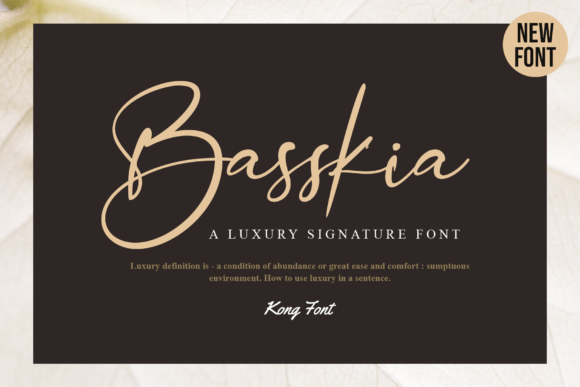
Basskia is a digital typeface characterized by its flowing, organic letterforms that mimic natural handwriting. Created by Kong Font Studio and available through platforms like Creative Fabrica, it’s designed to inject warmth, personality, and a human touch into digital creations. Its core value lies in its ability to bridge the gap between the precision of digital tools and the authenticity of handcrafted art. For crafters using Silhouette Design Studio or designers working in Photoshop, its compatibility is a practical advantage, streamlining the process from concept to execution.
The true strategic asset, however, is its PUA encoding. This technical feature means that every glyph, alternate character, and ligature built into the font is fully accessible through standard character maps. This isn't a minor detail; it's a significant workflow enhancer. It eliminates the frustration of inaccessible special characters, allowing for nuanced customization without complex software workarounds. For a professional, this translates to saved time and expanded creative possibilities, directly impacting project timelines and the quality of the final deliverable.
Aligning Basskia with Strategic Goals
Deploying Basskia without a clear objective is like choosing a tool before knowing the task. Its playful, casual nature makes it inherently unsuitable for every context. The first step in using it strategically is to ask: what is the primary goal of this communication? Is it to build trust, evoke excitement, appear approachable, or convey luxury? Basskia excels in scenarios where the goal is to create a sense of friendliness, creativity, and personal connection.
Effective Use Cases for Basskia
When applied thoughtfully, Basskia can significantly enhance specific project types and business objectives:
- Brand Identity for Niche Markets: For businesses targeting audiences that value authenticity and craft—such as boutique bakeries, indie craft stores, yoga studios, or artisanal product lines—Basskia can become a cornerstone of their visual identity. It communicates a hands-on, approachable brand personality that resonates with these communities.
- Marketing and Engagement: In digital marketing, Basskia can be powerfully effective in specific channels. Use it for social media graphics, email newsletter headers, and call-to-action buttons where you want to reduce perceived barriers and encourage engagement. Its friendly vibe can increase click-through rates on promotional content aimed at driving community interaction or sales of creative products.
- Creative Projects and Personal Branding: For freelancers, bloggers, and educators in creative fields, Basskia can help establish a distinctive personal brand. It’s ideal for logo elements, website hero text, or the title slide of a presentation, setting a tone that is both professional and personable. It signals that the creator values design and individuality.
- Product and Packaging Design: On physical products, particularly those in the gift, stationery, or hobbyist space, Basskia adds a layer of charm and perceived value. Think of product names on artisanal candles, labels for homemade jams, or designs for greeting cards. It helps the product stand out on a shelf by telling a story of care and creativity.
Strategic Considerations and Potential Pitfalls
The very characteristics that make Basskia useful also define its limitations. Using it without context can undermine your message and brand perception.
- Professional and Corporate Contexts: Avoid using Basskia for primary headings in corporate reports, legal documents, financial services websites, or any context where authority, clarity, and serious professionalism are paramount. Its casualness can be misinterpreted as a lack of seriousness.
- Readability at Small Sizes: Handwritten scripts often struggle with legibility when used for body text or at very small scales. Basskia should be reserved for headlines, titles, logos, or short, impactful phrases. For longer passages of text, pair it with a clean, highly readable sans-serif or serif font to maintain accessibility.
- Brand Consistency: Introducing Basskia into an established brand system requires careful planning. It must complement existing brand fonts and colors. A sudden shift to a playful script can confuse your audience if it doesn't align with the brand's core message and history.
A Practical Framework for Implementation
Integrating Basskia effectively into your toolkit requires a deliberate approach. Think of it as a component in a larger system, not a standalone solution.
- Define the Role: Before downloading, decide its specific function. Is it for all your social media graphics? Only for sale announcements? Or just for your personal logo? Assigning a clear role prevents inconsistent and random application.
- Master the Glyphs: Dedicate time to exploring the full character set provided by its PUA encoding. Experiment with alternate letters and ligatures in your design software. This allows you to customize the text, making it look less like a standard font and more like a unique, hand-lettered element. This customization is where the real value is unlocked.
- Establish Pairing Rules: Create a simple style guide for yourself or your team. Specify which font Basskia should be paired with for different situations. For example: "Basskia for main headlines, Montserrat for subheadings and body text." This ensures visual harmony and brand consistency across all materials.
- Test in Context: Never design in isolation. Place your Basskia-driven design in its intended environment—a mockup of a social media feed, a product package template, or a website layout. Assess its impact. Does it draw the right kind of attention? Does it support the overall message? Does it remain legible and effective?
Long-Term Value and Sustainable Creativity
The strategic use of a resource like Basskia contributes to long-term creative and operational efficiency. By having a defined, high-quality script font in your arsenal that is both compatible and fully featured, you reduce decision fatigue and speed up the design process for appropriate projects. It becomes a reliable tool for achieving a specific creative outcome, allowing you to focus energy on other strategic aspects of your work.
Ultimately, Basskia is a testament to the idea that the right tool, used with intention, can elevate a project from ordinary to memorable. Its value is not in its ubiquity, but in its strategic application. By understanding its strengths—its playful personality, its compatibility, and its accessible glyph set—and by respecting its limitations, you can make a conscious decision to use it where it will have the greatest positive impact. This thoughtful approach to typography is what separates random decoration from purposeful design, leading to clearer communication, stronger branding, and more effective results.